
Whoa!
I still remember the first time I chased a mint on Solana and felt totally lost.
My instinct said there had to be a faster way.
At first I thought “just use a block explorer”, but that was too vague; I needed something that understands SPL tokens, Metaplex metadata, and marketplace quirks all at once.
So I dug in, poked around dev tools, and got a little obsessed—here’s what I’ve learned.
Seriously?
Yeah—tracking tokens on Solana is different.
Solana’s parallelized architecture means transactions arrive in bulk and often touch multiple programs, so a simple tx hash view can hide the story.
Initially I thought reading raw logs would be enough, but then realized that program-specific decoding (like token program instructions and metadata program calls) is where the meaning lives.
On one hand you can eyeball a transfer, though actually you need an indexer that decodes instructions and groups token events by mint to get a usable token tracker.
Hmm… somethin’ bothered me about generic explorers.
They show trades and balances, but not the lineage of a token—who minted it, who set authorities, or whether a collection’s metadata is verified.
That matters a lot for NFTs.
If metadata lives off-chain (IPFS or Arweave), a marketplace listing might point at stale info or a fake cover image, and that can ruin an otherwise legitimate trade.
So, a good NFT tracker must surface on-chain mint details and the actual metadata URIs, and must let you peek behind the curtain quickly.
Here’s the thing.
A great token tracker will let you: see total supply and decimals, trace token authority changes, list top holders, and map transfers across DEXs and wallets.
Those features help you spot red flags—like a single wallet holding 99% of a supply or frequent authority rotations that suggest a rug.
I use program-decoded views to confirm whether a “burn” was actually a burn.
Sometimes wallets “close” accounts and that looks like a burn unless you check the token program’s instruction details.
Check this out—
Practical checklist: what to look for in a token tracker
Whoa!
Look for these basics first.
A token page should show mint address, supply, decimals, and authorities.
But more than that, it should expose the top token holders and allow sorting by balance change over time so you can see concentration or distribution trends.
If the tracker offers a direct way to copy the mint address and search it on-chain, that’s a big plus for quick verification.
Seriously?
Yes—transaction context matters.
A token swap looks like one thing in a block explorer, and a liquidity-add looks like another; good explorers tag DEX interactions (Raydium, Orca, Jupiter) instead of leaving you to guess.
That tagging reduces your cognitive load when you’re auditing on-the-fly.
Also, a token tracker that ties to price history or CEX listings can save you from buying into illiquid tokens that have artificial on-chain trades but no real market depth.
Hmm… I should mention APIs.
If you’re building tools or alerts, an explorer with a robust API and websocket support is gold.
You want endpoints for recent transfers, holder snapshots, and mint history.
Without them, you end up scraping HTML or polling inefficiently, which is slow and fragile.
My instinct here is simple: legit tooling equals stable APIs that scale.
NFT tracker features that actually matter
Whoa!
Don’t be fooled by pretty gallery pages.
The useful stuff hides under the hood: verified collection flags, creator endorsements, supply breakdown (editions vs uniques), and metadata URIs (Arweave/IPFS) with hash verification.
You need to see whether the on-chain metadata matches the content hash hosted off-chain.
If the URI or metadata field was updated after mint, that should be obvious—because it affects provenance and rarity calculations.
Okay, so check for minting timelines.
A good NFT tracker should list the initial mint tx, and link subsequent transfers and marketplace listings.
That way you can spot wash trades or shill wallets moving tokens around to simulate demand.
And if you care about royalties or creator splits, the tracker should expose creators’ addresses and shares from the token metadata (Metaplex standard).
I’m biased, but creator transparency is one reason I favor explorers that surface Metaplex fields clearly.
Here’s another real-world tip.
When a high-value NFT is sold, open the sell tx and inspect the program logs: you want to confirm which program handled the sale (Magic Eden, Metaplex Auction, or custom contracts) and whether the expected royalty payout occurred.
Sometimes marketplaces implement “bypass” flows or off-chain agreements—those are red flags.
Actually, wait—let me rephrase that: the on-chain record will tell the true story, if you know where to look.
So aim for a tracker that exposes program-level instruction decoding instead of just token transfers.
Tracing token flows — short guide
Whoa!
Start with the mint address.
Then find top holders and map transfers chronologically.
Look for repeated movements to the same cluster of wallets; that’s often an exchange or a bot network.
Longer-term holdings are usually safer signals than flash trades.
Initially I thought bigger holder counts meant safer tokens.
But then I noticed many spam airdrops inflate holder numbers without real holders.
On one hand, a broad distribution can indicate community trust, though actually token utility and on-chain activity matter more.
So verify holder activity—are they dormant wallets, or active participants interacting with projects and DEXs?
That nuance is something only thoughtful token trackers make effortless to see.
Why explorer UX matters
Whoa!
Speed matters.
If pages take ages to load, you miss windows for swaps or arbitrage.
Filters and saved searches are underrated features; they let you quickly narrow to suspicious transfers or newly minted tokens.
Also, watchlists and alerts turn passive monitoring into active safety—price, large transfers, and token authority changes should trigger notifications.
I’ll be honest: this part bugs me.
Many explorers prioritize aesthetics over practical developer and trader features.
I want concise transaction decoding, copyable instruction text, and quick links to the raw JSON for deeper debugging.
Oh, and a decent mobile view—because a lot of trades start as notifications on your phone.
Knowing this, I tend to use a combo of desktop for deep analysis and mobile for alerts.
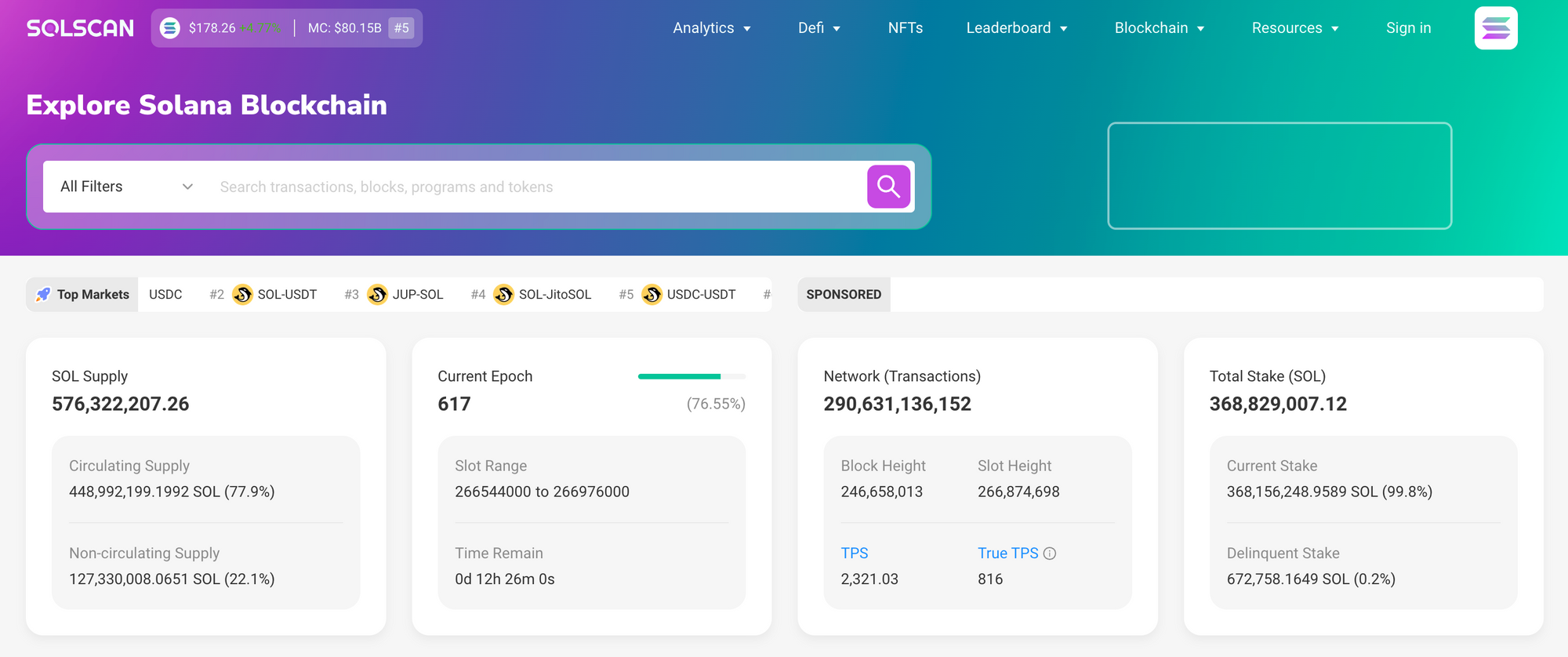
One tool I keep coming back to is solscan, which balances decoding, UX, and developer features in a way that often saves time during frantic on-chain sleuthing.
FAQ
How do I verify an NFT’s metadata?
Start at the mint transaction and check the metadata account created by the Metaplex program; copy the URI and compare its hash to the on-chain metadata fields.
If the explorer exposes the decoded metadata and the on-chain data clearly, you can validate whether the image or JSON was altered post-mint.
If you see a changed URI, treat that collection with caution until creators explain the change.
What indicates a risky token?
Large concentration of supply in one or a few wallets, frequent authority key changes, liquidity held by unknown contracts, and sudden big transfers to exchanges are all red flags.
Also watch for tokens with tiny on-chain trade volumes but high price volatility; that often means low liquidity and potential manipulation.
